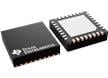

ADC3422IRTQT

Texas Instruments
595-ADC3422IRTQT
ADC3422IRTQT

Fab. :

Description :
Convertisseurs analogique-numérique - CAN Quad-Channel 12-Bit 50-MSPS Analog-to- A A 595-ADC3422IRTQR

Modèle de ECAO:
Téléchargez gratuitement le chargeur de bibliothèque pour convertir ce fichier pour votre outil ECAD. En savoir plus sur le modèle ECAD.

Disponibilité

Stock:
0

Vous pouvez toujours acheter ce produit pour une commande de réassortiment.

Sur commande:
249
02/06/2026 attendu
Délai usine :
18
Semaines Délai de production estimé en usine pour des quantités supérieures à celles indiquées.
Minimum : 1   Multiples : 1
Prix unitaire:
-,-- €
Ext. Prix:
-,-- €
Tarif est.:
Conditionnement:
Bobine complète(s) (commandez en multiples de 250)

Prix (EUR)

Qté. Prix unitaire
Ext. Prix
Ruban à découper / MouseReel™
31,48 € 31,48 €
31,10 € 311,00 €
30,14 € 753,50 €
29,70 € 2 970,00 €
Bobine complète(s) (commandez en multiples de 250)
25,52 € 6 380,00 €
† Les frais pour 5,00 € MouseReel™ seront calculés et ajoutés à votre panier. Les commandes MouseReel™ ne peuvent être ni annulées ni retournées.

Attribut de produit Valeur d'attribut Sélectionner l'attribut
Texas Instruments
Catégorie du produit: Convertisseurs analogique-numérique - CAN
RoHS:  
ADC3422
SMD/SMT
QFN-56
12 bit
4 Channel
Serial LVDS
50 MS/s
Differential/Single-Ended
Pipeline
1.8 V
1.8 V
70.2 dB
- 40 C
+ 85 C
Reel
Cut Tape
MouseReel
Marque: Texas Instruments
ENOB - Nombre de bits significatifs: 11.5 Bit
Fonctionnalités: Low Power
Sensibles à l’humidité: Yes
Consommation d'énergie: 228 mW
Type de produit: ADCs - Analog to Digital Converters
SFDR - Gamme dynamique exempte de parasites: 90 dB
SINAD - Rapports signal-bruit et distorsion: 70.9 dB
Nombre de pièces de l'usine: 250
Sous-catégorie: Data Converter ICs
Poids de l''unité: 196,300 mg
Produits trouvés:
Pour consulter des produits similaires, sélectionnez au moins une case.
Sélectionnez au moins une case pour consulter des produits similaires dans cette catégorie.
Attributs sélectionnés: 0

Cette fonctionnalité nécessite l'activation de JavaScript.

Codes de conformité
TARIC:
8542399000
CNHTS:
8542399000
CAHTS:
8542390000
USHTS:
8542390030
JPHTS:
854239099
MXHTS:
8542399901
ECCN:
EAR99
Classifications d’origine
Pays d'origine:
Philippines
Pays d'origine de l'assemblage:
Philippines
Pays de diffusion:
États-Unis
Le pays est susceptible de changer au moment de l’expédition.

ADC342x/ADC342x-Q1 Quad-Channel 12-Bit ADCs

Texas Instruments ADC342x/ADC342x-Q1 Quad-Channel 12-Bit Analog-to-Digital Converters are a high-linearity, ultra-low power, quad-channel, 12-bit, 25-MSPS to 125-MSPS, analog-to-digital converters (ADCs). The devices are designed specifically to support demanding, high input frequency signals with large dynamic range requirements. An input clock divider allows more flexibility for system clock architecture design and the SYSREF input enables complete system synchronization. The ADC342x supports serial low-voltage differential signaling (LVDS) in order to reduce the number of interface lines, thus allowing for high system integration density. The serial LVDS interface is two-wire, where each ADC data are serialized and output over two LVDS pairs. An internal phase-locked loop (PLL) multiplies the incoming ADC sampling clock to derive the bit clock that is used to serialize the 12-bit output data from each channel. The ADC342x-Q1 devices are AEC-Q100 qualified for automotive applications.

CAN 12/24 bits haut débit ADC3x

Texas Instrument ADC3x High-Speed 12/14-Bit Analog-to Digital Converters are a high-linearity, ultra-low power, dual-channel, 12 or 14-bit, 25-MSPS to 125-MSPS, analog-to-digital converters (ADCs). These devices are designed specifically to support demanding, high input frequency signals with large dynamic range requirements. An input clock divider allows more flexibility for system clock architecture design and the SYSREF input enables complete system synchronization. The ADC3x supports serial low-voltage differential signaling (LVDS) in order to reduce the number of interface lines, thus allowing for high system integration density. The serial LVDS interface is two-wire, where each ADC data are serialized and output over two LVDS pairs. An internal phase-locked loop (PLL) multiplies the incoming ADC sampling clock to derive the bit clock that is used to serialize the 12 or 14-bit output data from each channel.
Learn More