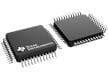

M38510/05852BCA

595-M38510/05852BCA
M38510/05852BCA

Fab. :

Description :
CI commutateur analogique CMOS quad bilateral switch 14-CDIP -55 to 125

Cycle de vie:
Disponibilité restreinte:
Cette référence n''est actuellement pas disponible auprès de Mouser. Le produit peut être disponible en distribution limitée ou par commande spéciale d''usine.
Modèle de ECAO:
Téléchargez gratuitement le chargeur de bibliothèque pour convertir ce fichier pour votre outil ECAD. En savoir plus sur le modèle ECAD.
Mouser ne vend pas actuellement ce produit dans votre région.

Disponibilité

Stock:

Attribut de produit Valeur d'attribut Sélectionner l'attribut
Texas Instruments
Catégorie du produit: CI commutateur analogique
Restrictions en matière d'expédition :
 Mouser ne vend pas actuellement ce produit dans votre région.
Through Hole
CDIP-16
4 Channel
4 x SPST
240 Ohms
3 V
18 V
+/- 7.5 V
+/- 7.5 V
30 ns
30 ns
- 55 C
+ 125 C
CD4066B
Tube
Marque: Texas Instruments
Pays d’assemblage: Not Available
Pays de diffusion: Not Available
Pays d'origine: Not Available
Type de produit: Analog Switch ICs
Nombre de pièces de l'usine: 1
Sous-catégorie: Switch ICs
Courant d’alimentation maximal: 5 uA
Type d'alimentation: Single Supply, Dual Supply
Poids de l''unité: 1,200 g
Produits trouvés:
Pour consulter des produits similaires, sélectionnez au moins une case.
Sélectionnez au moins une case pour consulter des produits similaires dans cette catégorie.
Attributs sélectionnés: 0

CD4066B Quad Bilateral Switch

Texas Instruments CD4066B Quad Bilateral Switch is intended for transmitting or multiplexing analog or digital signals. The device is pin-for-pin compatible with the CD4016B but exhibits a much lower on-state resistance. The on-state resistance is also relatively constant over the full signal-input range. The CD4066B device consists of four bilateral switches with independent controls. Both the p and the n devices in a given switch are biased on or off simultaneously by the control signal. The well of the n-channel device on each switch is tied to either the input (when the switch is on) or to VSS (when the switch is off). This configuration eliminates the variation of the switch-transistor threshold voltage with an input signal and keeps the on-state resistance low over the full operating-signal range.