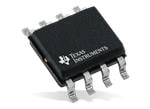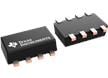

TPS92511DDA

Texas Instruments
595-TPS92511DDA
TPS92511DDA

Fab. :

Description :
CI de pilotes d’éclairage par LED 500mA 30W Crnt Buck LED Dvr A 595-TPS925 A 595-TPS92511DDAR

Modèle de ECAO:
Téléchargez gratuitement le chargeur de bibliothèque pour convertir ce fichier pour votre outil ECAD. En savoir plus sur le modèle ECAD.

En stock: 17 353

Stock:
17 353 Expédition possible immédiatement
Délai usine :
6 Semaines Délai de production estimé en usine pour des quantités supérieures à celles indiquées.
Minimum : 1   Multiples : 1
Prix unitaire:
-,-- €
Ext. Prix:
-,-- €
Tarif est.:

Prix (EUR)

Qté. Prix unitaire
Ext. Prix
1,35 € 1,35 €
0,989 € 9,89 €
0,797 € 19,93 €
0,759 € 72,11 €
0,74 € 210,90 €
0,712 € 405,84 €
0,645 € 674,03 €
0,623 € 1 598,00 €
0,619 € 3 116,67 €

Autre conditionnement

Fab. Numéro de référence:
Conditionnement:
Reel, Cut Tape, MouseReel
Disponibilité:
En stock
Prix:
1,14 €
Min.:
1

Produit similaire

Texas Instruments TPS92511DDAR
Texas Instruments
CI de pilotes d’éclairage par LED 500mA 30W Anode Cons tant Crnt Buck A 59 A 595-TPS92511DDA

Attribut de produit Valeur d'attribut Sélectionner l'attribut
Texas Instruments
Catégorie du produit: CI de pilotes d’éclairage par LED
RoHS:  
1 Output
Buck
500 mA
SO-PowerPad-8
65 V
4.5 V
50 kHz to 500 kHz
Adjustable
TPS92511
- 40 C
+ 125 C
Adjustable Switch Frequency, Enable/Shutdown, Integrated Switch, Thermal Shutdown
Tube
Marque: Texas Instruments
Atténuation de lumière: Analog, PWM
Tension d'entrée: 4.5 V to 65 V
Sensibles à l’humidité: Yes
Style de montage: SMD/SMT
Nombre de canaux: 1 Channel
Type de sortie: Constant Current
Type de produit: LED Lighting Drivers
Nombre de pièces de l'usine: 95
Sous-catégorie: Driver ICs
Courant d’alimentation maximal: 2.7 mA
Type: Inductive
Poids de l''unité: 70,600 mg
Produits trouvés:
Pour consulter des produits similaires, sélectionnez au moins une case.
Sélectionnez au moins une case pour consulter des produits similaires dans cette catégorie.
Attributs sélectionnés: 0

Cette fonctionnalité nécessite l'activation de JavaScript.

Codes de conformité
TARIC:
8542319000
CNHTS:
8542399000
CAHTS:
8542390000
USHTS:
8542390090
JPHTS:
854239099
MXHTS:
8542310302
ECCN:
EAR99
Classifications d’origine
Pays d'origine:
Malaisie
Pays d'origine de l'assemblage:
Non disponible
Pays de diffusion:
Non disponible
Le pays est susceptible de changer au moment de l’expédition.

IS32LT3175N/P Single-Channel Linear LED Drivers

ISSI IS32LT3175N/P Single-Channel Linear LED Drivers come with fade in/out and PWM dimming. The regulators serve as a stand-alone LED driver-configurable from 20mA to 150mA with external resistors, no microcontroller is necessary. A logic level “courtesy light” signal from the PWM pin can be interfaced to precisely drive the LED channel. The IS32LT3175P obtains a positive polarity PWM signal. In addition, the IS32LT3175N obtains a negative polarity PWM signal. The regulator integrates a 63-step fade-in and fades out the algorithm (Gamma correction). This causes the output LED current to increasingly rise up to the full source value after the EN pin is pulsed.

TPS92511 Constant Current Buck LED Driver

Texas Instruments TPS92511 Constant Current Buck LED Driver is an easy-to-use 65V constant current buck converter for driving a single LED string. This allows current up to 0.5A and with an efficiency of up to 95%. Only 5 external components are required for basic operation. A single-layer PCB layout is feasible because of the integration of an N-MOSFET. There is no external current sensing resistor, no external compensation and it includes the proper terminal assignment. A high-value external resistor programs the LED current so that fine-tuning of the LED current can be achieved. Another high-value external resistor programs a constant switching frequency from 50kHz to 500kHz. EMI design becomes easier as a result of the constant switching frequency. The TPS92511 from Texas Instruments provides a wide input voltage range from 4.5V to 65V. By adding simple external circuits, the device can handle applications with even higher input voltages.