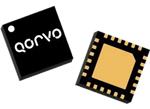

TGL2927-SMTR7

Qorvo
772-TGL2927-SMTR7
TGL2927-SMTR7

Fab. :

Description :
Conditionnement de signaux 200W Limiter

Modèle de ECAO:
Téléchargez gratuitement le chargeur de bibliothèque pour convertir ce fichier pour votre outil ECAD. En savoir plus sur le modèle ECAD.

Disponibilité

Stock:
Non stocké
Délai usine :
24 Semaines Délai de production estimé en usine.
Minimum : 500   Multiples : 500
Prix unitaire:
-,-- €
Ext. Prix:
-,-- €
Tarif est.:
Ce produit est expédié GRATUITEMENT

Prix (EUR)

Qté. Prix unitaire
Ext. Prix
Bobine complète(s) (commandez en multiples de 500)
35,93 € 17 965,00 €

Attribut de produit Valeur d'attribut Sélectionner l'attribut
Qorvo
Catégorie du produit: Conditionnement de signaux
RoHS:  
Signal Conditioning
Limiters
2 GHz to 4 GHz
SMD/SMT
QFN-20
- 40 C
+ 85 C
TGL2927
Reel
Marque: Qorvo
Perte d'insertion: 0.5 dB
Sensibles à l’humidité: Yes
Montage: Board Mount
Nombre de pièces de l'usine: 500
Sous-catégorie: Filters
Type: GaAs VPIN Limiter
Raccourcis pour l'article N°: TGL2927-SM TGL2927
Produits trouvés:
Pour consulter des produits similaires, sélectionnez au moins une case.
Sélectionnez au moins une case pour consulter des produits similaires dans cette catégorie.
Attributs sélectionnés: 0

USHTS:
8542390090
ECCN:
EAR99

TGL2927-SM VPIN Limiter

Qorvo TGL2927-SM features a high power receive protection circuit that operates from 2 to 4GHz and is capable of withstanding up to 200W incident power levels. The TGL2927-SM allows <18dBm of flat leakage to pass through and contributes <0.6dB of insertion loss. Ideal for protecting critical sensitive receive components for commercial and military radar.

TGL GaAs VPIN Limiters

Qorvo TGL Series GaAs (Gallium Arsenide) VPIN Limiters are ideal for commercial and military radar applications, communications systems, and electronic warfare where protecting sensitive receive components from damage is critical. These devices do not require DC bias, and achieves a low insertion loss all in a small form factor. These features allow for simple integration with minimal impact to systemperformance.