
4409

Adafruit
485-4409
4409

Fab. :

Description :
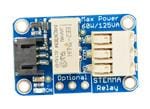
Accessoires Adafruit Adafruit STEMMA Non-Latching Mini Relay - JST PH 2mm

Modèle de ECAO:
Téléchargez gratuitement le chargeur de bibliothèque pour convertir ce fichier pour votre outil ECAD. En savoir plus sur le modèle ECAD.

En stock: 43

Stock:
43 Expédition possible immédiatement
Délai usine :
1 semaine Délai de production estimé en usine pour des quantités supérieures à celles indiquées.
Minimum : 1   Multiples : 1
Prix unitaire:
-,-- €
Ext. Prix:
-,-- €
Tarif est.:

Prix (EUR)

Qté. Prix unitaire
Ext. Prix
5,98 € 5,98 €

Attribut de produit Valeur d'attribut Sélectionner l'attribut
Adafruit
Catégorie du produit: Accessoires Adafruit
RoHS:  
Accessories
STEMMA Non-Latching Mini Relay
Marque: Adafruit
Description/Fonction: STEMMA Non-Latching Mini Relay
Type de produit: Accessories
Série: STEMMA
Nombre de pièces de l'usine: 1
Sous-catégorie: Supplies
Produits trouvés:
Pour consulter des produits similaires, sélectionnez au moins une case.
Sélectionnez au moins une case pour consulter des produits similaires dans cette catégorie.
Attributs sélectionnés: 0

USHTS:
8536410020
ECCN:
EAR99

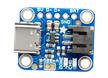
STEMMA Non-Latching Mini Relay Breakout Board

Adafruit STEMMA Non-Latching Mini Relay Breakout Board gives the user the power to control and control over power. The board allows the user to turn on and off lamps, fans, solenoids, and other small appliances that run on up to 250VAC or DC power using any microcontroller or microcomputer. There is no worrying about flyback diodes, level shifting, or pin protection, as the STEMMA board takes care of that automatically. This board can be used with any 3V or 5V microcontroller/microcomputer. To use it with a breadboard, Raspberry Pi or Arduino, pair it with a JST 3-pin to breadboard cable. If the user wants to use it with a Circuit Playground or micro:bit, there is a cable with alligator clips available. Each STEMMA board comes with a fully assembled and tested PCB but no cable. No soldering is required to use it. There's an optional second switch on the side of the PCB. If the user gets a 3-pin terminal block you can solder that in place, but it is optional.