




Analog Devices Inc. Interface de surveillance du rythme cardiaque AD8232
L'interface de surveillance du rythme cardiaque Analog Devices AD8232 est un bloc de conditionnement de signal intégré pour les ECG et d'autres applications de mesure de biopotentiel. Il est conçu pour extraire, amplifier et filtrer les signaux biopotentiel faibles en présence de conditions bruyantes, comme celles créées par le mouvement ou le placement d'électrodes à distance. Cette conception permet d'utiliser convertisseur analogique/numérique (CAN) ultra-basse puissance ou un microcontrôleur intégré, afin d'acquérir le signal de sortie sans difficultés. L'AD8232 peut mettre en œuvre un filtre passe-haut à deux pôles pour éliminer les artefacts de mouvement et le potentiel d'une demi-cellule d'électrode. Ce filtre est étroitement couplé avec l'architecture d'instrumentation de l'amplificateur afin de permettre un filtrage de gain élevé et passe-haut en une seule étape, ce qui réduit l'encombrement et les coûts.
The AD8232 and AD8233 can implement a two-pole high-pass filter for eliminating motion artifacts and the electrode half-cell potential. This filter is tightly coupled with the instrumentation architecture of the amplifier to allow both large gain and high-pass filtering in a single stage, thereby saving space and cost.
An uncommitted operational amplifier enables the AD8232 and AD8233 to create a three-pole low-pass filter to remove additional noise. The user can select the frequency cutoff of all filters to suit different types of applications. To improve common-mode rejection of the line frequencies in the system and other undesired interferences, the AD8232 includes an amplifier for driven lead applications, such as right leg drive (RLD). The AD8232 and AD8233 includes a fast restore function that reduces the duration of otherwise long settling tails of the high-pass filters. After an abrupt signal change that rails the amplifier (such as a leads off condition), the AD8232 and AD8233 automatically adjusts to a higher filter cutoff. This feature allows the AD8232 and AD8233 to recover quickly, and therefore, to take valid measurements soon after connecting the electrodes to the subject.
Caractéristiques
- Fully integrated single-lead ECG front end
- 170μA (typical) (AD8232), 50μA (typical) (AD8233) Low supply current
- 80dB (dc to 60Hz) Common-mode rejection ratio
- Two or three electrode configurations
- High signal gain (G = 100) with dc blocking capabilities
- 2-pole adjustable high-pass filter
- Accepts up to ±300mV of half cell potential
- Fast restore feature improves filter settling
- Uncommitted op amp
- 8kV HBM ESD rating
- Shutdown pin
- 3-pole adjustable low-pass filter with adjustable gain
- Leads off detection: ac or dc options
- Integrated right leg drive (RLD) amplifier
- Single-supply operation
- 2.0V to 3.5V (AD8232)
- 0.7V to 3.5V (AD8233)
- Integrated reference buffer generates virtual ground
- Rail-to-rail output
- Internal RFI filter
- 20-lead 4mm × 4mm LFCSP package (AD8232)
- 20-lead 2mm × 1.7mm WLCSP package (AD8233)
Applications
- Fitness and activity heart rate monitors
- Portable ECG
- Remote health monitors
- Gaming peripherals
- Biopotential signal acquisition
Associated Products
Analog Devices Inc. Frontal analogique AD5940/AD5941
Dispositifs AFE capables de mesurer la tension, le courant et l'impédance avec une haute précision.
Evaluation Board
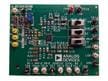
Analog Devices Inc. AD8232-EVALZ Evaluation Board
Designed for the evaluation of the AD8232 heart rate monitor front end.
Block Diagram

Additional Resources
Condition-Based Monitoring of the Human Body
With advances in technology, vital sign monitoring will become increasingly common in various industries and throughout our daily lives. Whether used for treatment or prevention, such health-related solutions call for reliable and robust technology.
Learn More