




Texas Instruments AFE4404 Ultra-Small Integrated AFE
Texas Instruments AFE4404 Ultra-Small Integrated AFE is an analog front-end (AFE) for optical bio-sensing applications, such as heart-rate monitoring (HRM) and saturation of peripheral capillary oxygen (SpO2). The device supports three switching light-emitting diodes (LEDs) and a single photodiode. The current from the photodiode is converted into voltage by the trans-impedance amplifier (TIA). It is then digitized using an analog-to-digital converter (ADC). The ADC code can be read out using an I2C interface. The AFE also has a fully integrated LED driver with a 6-bit current control. Texas Instruments AFE4404 Ultra-Small Integrated AFE has a high dynamic range transmit and receive circuitry that helps with the sensing of very small signal levels.
Features
- Receiver
- 24-bit representation of the current input from a photodiode in twos complement format
- Individual DC offset subtraction DAC at TIA input for each LED and ambient phase
- Digital ambient subtraction at ADC output
- 10kΩ to 2MΩ programmable trans-impedance gain
- Dynamic power-saving mode to reduce current to less than 200µA
- 10SPS to 1000SPS pulse frequency
- Flexible pulse sequencing and timing control
- Flexible Clock Options
- 4MHz to 60MHz input clock external clocking
- 4MHz oscillator internal clocking
- I2C interface
- -20°C to +70°C operating temperature range
- 2.6mm × 1.6mm DSBGA package, 0.5mm pitch
- Supplies
- Rx: 2V to 3.6V
- Tx: 3V to 5.25V
- IO: 1.8V to 3.6V
- Transmitter
- Supports common anode LED configuration
- 100dB dynamic range
- 6-bit programmable LED current to 50mA (extendable to 100mA)
- Programmable LED on-time
- Simultaneous support of 3 LEDs for optimized SPO2, HRM, or multi-wavelength HRM
Applications
- Optical Heart-Rate Monitoring (HRM)
- Heart-Rate Variability (HRV)
- Pulse oximetry (SpO2 measurement)
- VO2 max
- Calorie expenditure
Additional Resources
Simplified Block Diagram

Related Development Tool
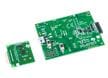
Texas Instruments Heart Rate Monitoring & Pulse Oximetry Eval Kit
Contains everything you need to evaluate TI AFE4404 devices.
Publié le: 2015-07-10
| Mis à jour le: 2023-11-01